 |
|
 ToddKolbGolf
|
Channel
ToddKolbGolf
|
Channel



Best Golf Clubs for Seniors: A Complete Buying Guide
Best Golf Clubs for Seniors: What to Look for in Every Club
Your swing has changed over the years. But the clubs in your bag may still be designed for the speed, strength and flexibility you had twenty years ago.
That mismatch is one reason an experienced golfer can make a good swing and still see a low drive, a topped fairway wood or an approach shot that leaks to the right. The equipment may be asking you to create more speed, rotation and precision than you comfortably have today.
The solution is not simply to buy clubs labeled “senior.” It is to understand which design features complement the swing you have now.
In this guide, I’ll explain what older golfers should look for in every major club category. I’ll also show you the clubs I helped design with award-winning club designer Josh Boggs to solve the problems I see every day in my students.
The goal is simple: help you launch the ball more easily, make more consistent contact and play with greater accuracy—without rebuilding your swing.
Quick Guide: What Should Older Golfers Look for in Golf Clubs?
| Club | Common problem | Helpful equipment characteristics | Club Recommendation |
|---|---|---|---|
| Driver | Low drives, slices and lost distance | Easy launch, stable face, draw-biased weighting and a responsive graphite shaft | Maxvert 2 Driver |
| Fairway wood | Topped shots and low “worm burners” | More usable loft, taller face, turf-friendly sole and square setup | Hypermax Hyway Wood |
| Hybrid | Inconsistent contact and shots leaking right | Shorter shaft, more upright lie, clear alignment and forgiving weighting | Maxvert Hybrid |
| Wedge | Chunks, shanks and inconsistent distance | Forgiving sole, face-centered sweet spot, clear alignment and lighter shaft | Align Grind Wedge |
| Putter | Pushes, pulls, shaky hands and poor distance control | Stability, clear alignment and a setup that fits your natural stroke | G-Track Putter |
If one club causes far more trouble than the others, start there. You do not need to replace your entire bag at once.
Why Golf Clubs Become Harder to Hit as We Get Older
Getting older does not make you a worse golfer. In fact, experience gives you advantages that younger players have not earned yet: better course management, a clearer understanding of your tendencies and the patience to play the shot the course requires.

But your body and swing may evolve. Most golfers eventually experience some combination of:
- Less clubhead speed
- Reduced hip and shoulder mobility
- A shorter backswing
- Less hand and forearm strength
- More difficulty maintaining balance
- Less time or desire to practice
Traditional equipment often makes those changes harder to manage. Low-lofted faces demand more speed. Long shafts make center contact more difficult. Flat lie angles encourage a flatter, more rotational swing. Heavy or rigid shafts require more effort to load and release.
The right equipment should not demand a younger golfer’s swing. It should help you get more from the speed, mobility and motion you already have.
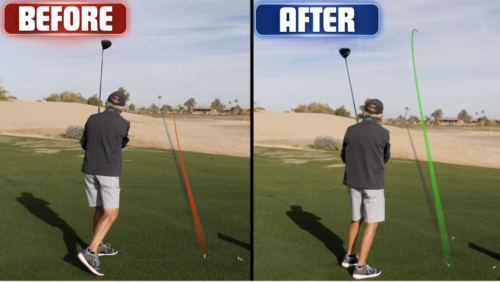
Best Driver for Seniors: Prioritize Launch, Face Control and Forgiveness
Distance begins with speed, but speed alone is not enough. A drive also needs the right launch conditions and a square clubface.
That is where many experienced golfers run into trouble. A typical modern driver places the shaft near the far edge of a large clubhead. This makes the face more difficult to control, especially if your hands and forearms are not as quick as they once were.
Weight placement matters, too. Golfers with moderate or slower swing speeds generally benefit from weight positioned low and toward the back of the head. This can help the ball launch higher and make the club more stable when contact misses the center.
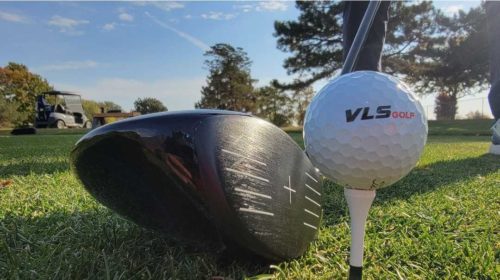
What an older golfer should look for in a driver
- Enough loft to help create a strong launch
- Low-and-back weighting for stability and forgiveness
- Draw-biased help if a slice is the common miss
- A lightweight graphite shaft matched to current swing speed
- A face with a generous effective hitting area
- A setup that makes square alignment easy to see
- A lie angle that works with a comfortable, more upright swing
Our recommendation: Maxvert 2 Driver
The Maxvert 2 was designed specifically around the experienced golfer’s swing.
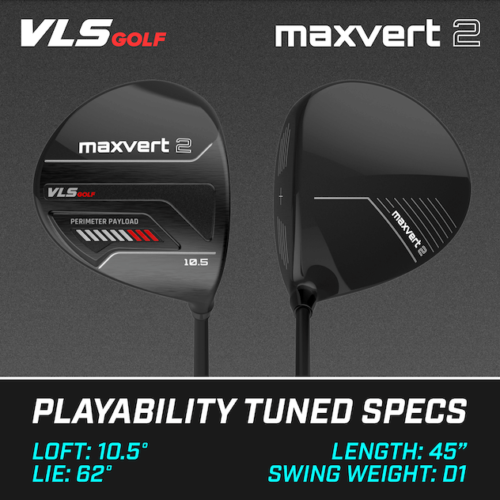
Its Perimeter Payload Weighting moves mass lower and farther back to promote easier launch and greater stability. The draw-biased design and Auto-Square Alignment help the club sit square instead of subtly encouraging an open face.
The Stability-Enhanced Shaft Shift positions the shaft axis closer to the clubhead’s center of gravity. That creates a more direct connection between your hands and the face, helping you square the club more naturally through impact.
The Maxvert 2 also features a larger, thinner Active Spring Face for more ball speed across a wider area. Its Adaptive Flex Graphite Shaft is designed to load and release with the golfer’s natural tempo rather than demanding extra effort.
For golfers who have lost distance, fight a slice or simply want more help finding the center of the fairway, these features work together to produce easier launch, better face control and useful forgiveness.
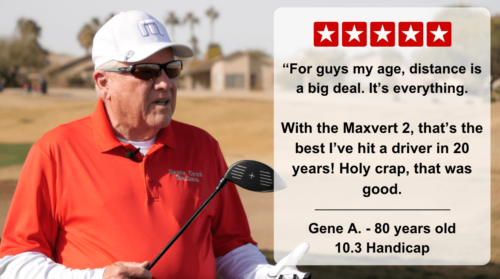
One Maxvert golfer, David, reported gaining 10–20 yards at age 69 while hitting approximately nine out of ten drives straight. Tom, who swings around 78 miles per hour, reported gaining 30 yards and said the ball “jumps off the face.” Individual results will vary, but those experiences reflect exactly what the Maxvert 2 was built to accomplish.
See the Maxvert 2 Driver and check current availability →
Want a deeper look at the design? Read the complete Maxvert 2 review.
Best Fairway Woods for Seniors: Use Loft to Your Advantage
The traditional 3-wood may be the most frustrating club in an experienced golfer’s bag.
It has relatively little loft, a shallow face and a long shaft. When the ball is sitting on the turf instead of a tee, that combination leaves almost no margin for error. Without enough speed, even solid contact may produce a low shot that cannot carry a hazard or hold a green.
The answer is not necessarily to swing harder. A fairway wood with more usable loft and a larger strike area can turn the same swing into a higher, more playable ball flight.
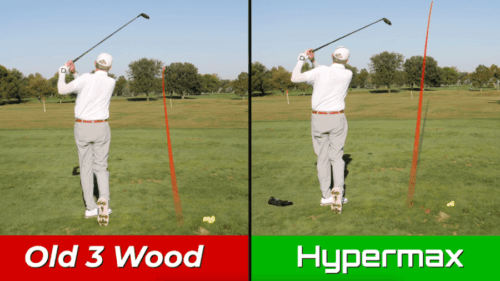
What an older golfer should look for in a fairway wood
- More loft than a traditional strong 3-wood
- A taller face that provides room for vertical misses
- A sole that glides through the turf
- Weight low in the head to assist launch
- A square or slightly draw-friendly setup
- A responsive graphite shaft
- A controllable shaft length
Our recommendation: Hypermax Hyway Wood
The Hypermax Hyway Wood was created for golfers who want fairway-wood distance without the low bullets, topped shots and demanding launch conditions of a traditional 3-wood.
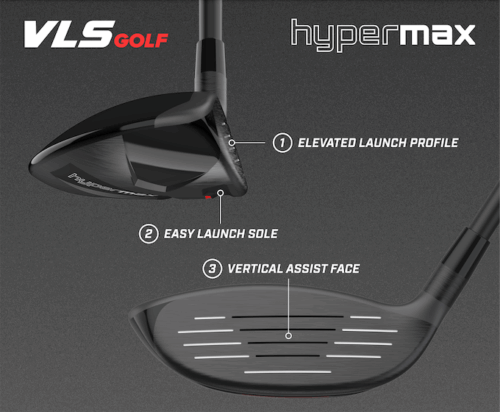
Its AirLaunch Trio combines three features:
- LaunchAssist Loft helps the ball climb without requiring exceptional speed.
- Vertical Assist Face creates a taller, wider strike zone for improved forgiveness.
- Easy Launch Sole uses a rounded shape and friction-reducing cutouts to glide through the turf.
The Hypermax also features Heel Assist Weighting, which positions weight low for launch and toward the heel to help the face turn over naturally. It sits square at address and uses an Adaptive Flex Graphite Shaft to provide speed without forcing the golfer to swing harder.
The 18° Hypermax can be used as an easier-launching alternative to a traditional 3-wood. The 24° model fills a role similar to a 7-wood, providing higher flight, softer landings and confidence on longer approach shots. Golfers who struggle with both ends of the fairway-wood category may benefit from carrying the pair.
John, a 76-year-old 8-handicap golfer, found the Hypermax launched higher and flew straight. Gary, 79, called the decision a “no-brainer.” Those reactions capture the key benefit: the Hypermax makes the fairway-wood shot feel realistic again.
See the Hypermax Hyway Wood and check current availability →
For testing details and a closer look at the technology, read the complete Hypermax review.
Best Hybrids for Seniors: Choose Control Over Extra Length
Hybrids are supposed to be easier to hit than long irons, but not every hybrid fulfills that promise.
An overly long shaft forces you farther from the ball and makes it harder to return the face square. A flat lie angle encourages more around-the-body rotation—the exact motion that becomes difficult when flexibility decreases. A curved leading edge can also complicate alignment and turf contact.
For an experienced golfer, a useful hybrid should feel controlled, launch easily and provide a reliable alternative to a demanding long iron.

What an older golfer should look for in a hybrid
- A controllable shaft length
- A more upright lie angle
- A sole that moves cleanly through the turf
- A straight leading edge and visible alignment help
- Draw-friendly weighting for easier face closure
- A thin, responsive face for useful ball speed
- Enough loft to produce carry and a softer landing
Our recommendation: Maxvert Hybrid
The Maxvert Hybrid is built around the needs of experienced golfers rather than elite tour players.
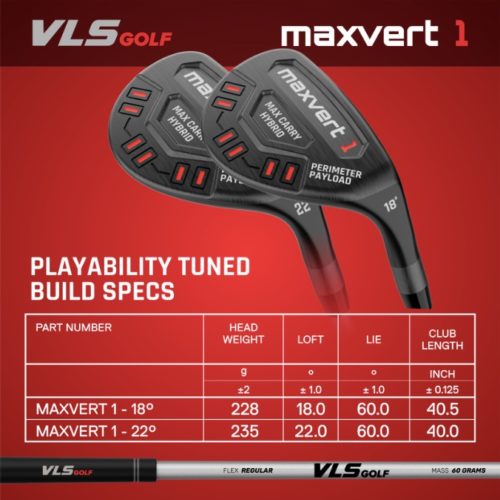
Its slightly shorter shaft improves clubhead control and center-face contact. The more vertical lie angle allows the golfer to stand closer to the ball and make a comfortable, upright motion with less demand on the back.
Shaft Shift Technology brings the golfer’s hands into a stronger relationship with the clubhead, while the Active Hot-Strike Surface uses a thin stainless-steel face to create ball speed without extra effort. Draw-biased Perimeter Payload Weighting helps the club release and limits the weak shot to the right.
The ground-hugging sole, straight leading edge and Fairway Finder Alignment Guide make setup and contact simpler. Instead of manipulating the club, the golfer can aim it, make a natural swing and trust the design.
The Maxvert Hybrid is available in 18°, 22° and 26° lofts, giving golfers options for replacing difficult long irons or filling distance gaps between their fairway woods and middle irons. The precise replacement depends on your current distances, so compare carry yardages rather than relying only on the number stamped on the club.
See the Maxvert Hybrids and check current availability →
For a detailed breakdown of the design, read the complete Maxvert Hybrid review.
Best Wedges for Seniors: Make Clean Contact Easier
Wedge play is rarely a speed problem. It is a contact, consistency and confidence problem.
Traditional wedges often have a sharp leading edge, a heel-biased center of gravity and a heavy steel shaft. These traits can work beautifully for a highly skilled golfer who practices frequently. For an everyday player, they can contribute to digging, chunking, shanking and inconsistent distance.
An experienced golfer may benefit more from a sole that resists digging, a sweet spot positioned nearer the center of the face and a lighter shaft that improves feel without straining the hands and arms.

What an older golfer should look for in a wedge
- A forgiving sole that does not dig aggressively
- Useful bounce for sand, rough and imperfect contact
- A face-centered sweet spot
- Clear visual alignment
- A lighter shaft that supports rhythm and feel
- A slightly more upright setup for a simple motion
- Loft options that cover both approaches and greenside shots
Our recommendation: Align Grind Wedge
The Align Grind Wedge is designed to simplify the short game.
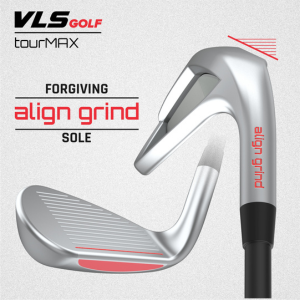
Its signature Align Grind Sole combines a flatter leading edge with a rounded trailing portion. The leading edge helps the club resist digging on turf shots, while the rounded back provides usable bounce from sand and tighter lies.
The thinner Active Low Face preserves more energy on the low-face contact common in wedge play. Perimeter Payload Weighting moves the sweet spot away from the heel and closer to the center of the face, creating more room between solid contact and the dreaded shank.
A visible Target Line Finder and straight leading edge make alignment easier. The more vertical lie encourages the golfer to stand closer and use a simpler back-and-through motion. Finally, the Adaptive Flex Graphite Shaft is lighter than the heavy steel shafts found in many wedges, supporting touch, rhythm and comfort.
The 48° Align Grind is well suited to lower, longer approaches and controlled shots around the green. The 56° provides the extra loft needed for bunkers, higher pitches and shots that must stop more quickly. Together, they give the experienced golfer two distinct trajectories without creating an unnecessarily complicated wedge setup.
Brian, a 72-year-old 17-handicap golfer, struggled with chunks, pulls and shanks before reporting that the wedge changed his pitch game completely. Another golfer said the upright lie and alignment features made his bunker play far more consistent.
See the Align Grind Wedges and check current availability →
See how the original design was developed in our complete wedge review.
Best Putter for Seniors: Find Stability Without Losing Feel
Putting does not require a fast swing, but age-related changes can still affect performance on the green.
Back discomfort may make a traditional setup unpleasant. Reduced stability in the hands can create unwanted face rotation. Some golfers develop a consistent push or pull, while others battle the yips and struggle to start the ball on line.
The right putter should help you aim clearly, quiet unnecessary hand action and match your natural stroke rather than forcing you into someone else’s technique.

What an older golfer should look for in a putter
- A stable head that resists twisting
- Strong alignment markings
- A length that allows a comfortable posture
- A grip that suits the desired amount of hand action
- Consistent roll on off-center contact
- A configuration that complements the golfer’s stroke pattern
Our recommendation: G-Track Putter
The G-Track Putter is fully adjustable, allowing the shaft position to be tuned to the golfer’s natural stroke. If you consistently push or pull putts, the setup can be adjusted to help the face return more squarely.
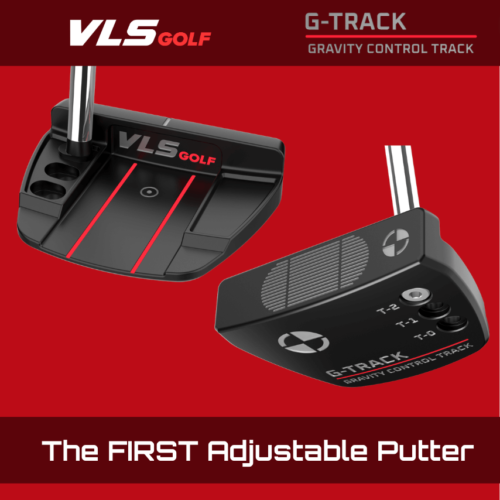
Golfers can choose between two configurations:
- The 38-inch counterbalanced model uses a longer grip to increase stability, reduce unwanted wrist action and allow a more upright, back-friendly posture.
- The 35-inch standard model uses a traditional pistol grip for golfers who prefer a familiar putter length and feel.
Both models combine stability weighting, bilateral alignment and a soft-but-solid feel to improve starting direction and distance control. The longer option can be especially useful for golfers fighting shaky hands or the yips, while the standard model delivers G-Track’s adjustability in a more traditional setup.
One golfer reported that the G-Track turned three-putts into two-putts and two-putts into one-putts, with noticeable improvement in both starting line and distance control. Individual outcomes will vary, but the ability to fit the putter to the stroke gives golfers a practical path toward greater consistency.
The G-Track conforms to the Rules of Golf. As with an adjustable driver, its setting must not be changed during a round.
See the G-Track Putter and check current availability →
For a closer look at its adjustability and performance, read the complete G-Track review.
Which Golf Club Should You Replace First?
Start with the club that costs you the most confidence or the most strokes.
- Replace the driver first if poor launch, slices or lost distance routinely put you in trouble from the tee.
- Replace the fairway wood first if you avoid using it or cannot produce enough height to carry hazards and hold greens.
- Replace long irons with hybrids if your longer approaches fly low, drift right or rarely find the center of the face.
- Replace your wedges first if chunks, shanks and inconsistent contact are adding strokes close to the green.
- Replace the putter first if a recurring push, pull, poor distance control or the yips are leading to frequent three-putts.
You do not need a completely new swing, and you may not need a completely new set. A single well-chosen club can solve a specific problem and make the game more enjoyable immediately.
Final Thoughts: Buy for the Swing You Have Today
Experience should be an advantage—not something your equipment forces you to overcome.
The best golf clubs for seniors are not simply lighter versions of standard clubs. They are designed around the realities of the experienced golfer’s game: moderate swing speed, changing mobility, a desire for consistent contact and no interest in spending hours rebuilding a swing.
Look for equipment that helps you launch the ball, square the face, find the center and swing comfortably. Those are the principles Josh Boggs and I used when designing every VLS club in this guide.
Your game has evolved. Your swing has evolved. Your equipment should, too.
Explore golf clubs built for the swing you have today →
Frequently Asked Questions
What are the best golf clubs for seniors?
The best clubs for seniors provide easy launch, forgiveness, stable face control and shaft options suited to moderate or slower swing speeds. The ideal set depends on the golfer’s most common misses, physical comfort and actual carry distances—not age alone.
Should older golfers use senior-flex shafts?
Not automatically. Shaft choice should be based on swing speed, tempo, ball flight and feel. Many older golfers benefit from a lighter or more flexible shaft, but a golfer with greater speed or a forceful transition may perform better with regular or stiff flex.
Are graphite shafts better for older golfers?
Graphite shafts are often helpful because they can reduce overall club weight, create speed with less effort and transmit less vibration into the hands and joints. The correct weight and flex still matter, so “graphite” alone does not guarantee a good fit.
Should seniors use more loft?
Golfers with moderate or slower swing speeds often benefit from more loft, especially in fairway woods, hybrids and drivers. More usable loft can improve launch, carry and landing angle. Too little loft may create low shots that run but do not carry hazards or hold greens.
Are hybrids better than long irons for older golfers?
Hybrids are usually easier to launch and more forgiving than traditional long irons. Their wider soles and deeper centers of gravity can help golfers produce useful height and carry. A shorter, more upright hybrid can provide additional control for an experienced golfer.
What is the easiest fairway wood for a senior to hit?
A fairway wood with more loft, a taller face, low weighting and a turf-friendly sole will generally be easier to hit than a low-lofted traditional 3-wood. For many golfers, an 18° wood is a more practical choice from the turf than a stronger 3-wood.
Should an older golfer use a longer putter?
A longer, counterbalanced putter can promote a more upright posture and reduce excessive hand or wrist action. This may help golfers with back discomfort, shaky hands or the yips. Golfers who prefer a traditional posture and feel may be more comfortable with a standard-length model.
Do senior golfers need to replace their entire set?
No. Start with the club that creates the most problems or costs the most strokes. Replacing one difficult club with a design that suits your current swing can make a meaningful difference without the expense or adjustment of changing the entire set.